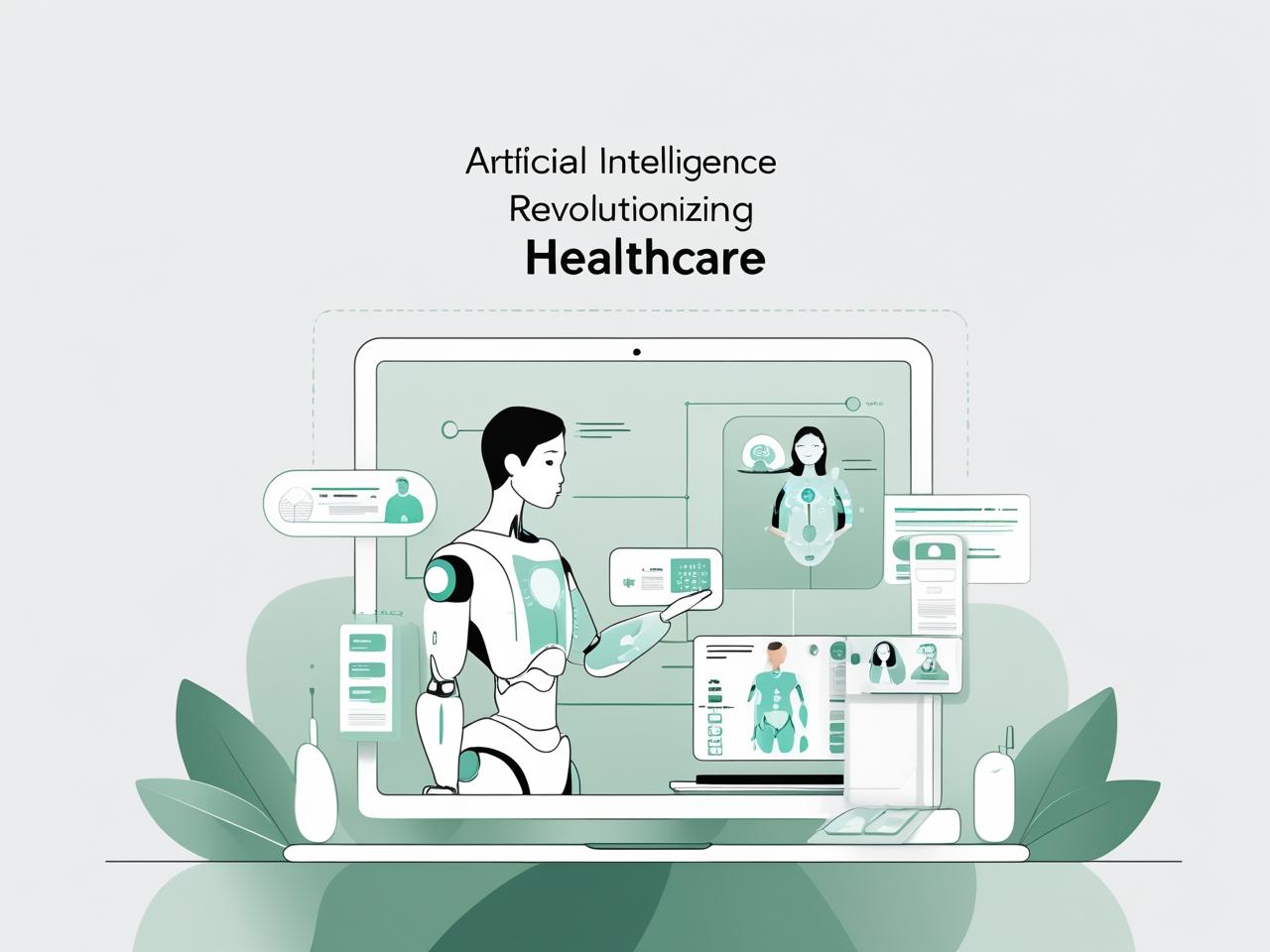
Artificial Intelligence in Healthcare
Artificial Intelligence is transforming healthcare delivery, from enhancing diagnostic accuracy to personalizing treatment plans and streamlining administrative processes. The integration of AI technologies in healthcare represents one of the most promising applications of artificial intelligence, with the potential to improve patient outcomes while reducing costs and increasing accessibility.
The Current State of AI in Healthcare
Medical imaging and diagnostic AI have achieved remarkable success, with AI systems now capable of detecting conditions like diabetic retinopathy, skin cancer, and lung nodules with accuracy matching or exceeding human specialists. These systems analyze medical images using deep learning algorithms trained on vast datasets of annotated medical images.
Drug discovery and development processes are being accelerated through AI-powered molecular modeling, compound screening, and clinical trial optimization. AI can identify promising drug candidates, predict their efficacy and safety profiles, and optimize clinical trial designs to reduce time and costs.
Electronic Health Records (EHR) analysis using natural language processing enables extraction of insights from unstructured medical data. AI systems can identify patterns in patient records, predict health risks, and assist in clinical decision-making by analyzing vast amounts of medical literature and patient data.
Diagnostic and Clinical Applications
Radiology and Medical Imaging represent the most mature applications of healthcare AI. Deep learning models analyze X-rays, CT scans, MRIs, and other medical images to detect abnormalities, measure disease progression, and assist radiologists in making more accurate diagnoses.
Pathology AI systems analyze tissue samples and microscopic images to identify cancer cells, determine tumor grades, and predict treatment responses. These systems can process slides faster than human pathologists while maintaining high accuracy levels.
Clinical Decision Support systems leverage AI to analyze patient data and provide treatment recommendations. These systems consider patient history, current symptoms, lab results, and medical literature to suggest diagnoses and treatment options.
Personalized Medicine and Treatment Optimization
Genomic analysis using AI enables personalized treatment approaches based on individual genetic profiles. Machine learning algorithms analyze genetic variations to predict disease risks, drug responses, and optimal treatment strategies for individual patients.
Precision dosing algorithms optimize medication dosages based on patient characteristics, genetic factors, and real-time monitoring data. This personalized approach improves treatment efficacy while reducing adverse effects.
Treatment response prediction models use AI to forecast how patients will respond to specific treatments, enabling clinicians to select the most effective therapies and avoid ineffective or harmful interventions.
Remote Monitoring and Preventive Care
Wearable devices and IoT sensors combined with AI analytics enable continuous health monitoring outside traditional healthcare settings. These systems can detect early warning signs of health deterioration and alert healthcare providers when intervention is needed.
Predictive analytics identify patients at risk for specific conditions or complications, enabling proactive interventions that can prevent hospitalization and improve outcomes. These models analyze patterns in vital signs, lab results, and patient behavior to identify risk factors.
Telemedicine platforms enhanced with AI capabilities provide remote consultations, symptom assessment, and triage services. AI chatbots can conduct initial patient assessments and direct patients to appropriate care levels.
Administrative and Operational Efficiency
Revenue cycle management and medical coding automation reduce administrative burden and improve accuracy. AI systems can automatically assign medical codes, detect billing errors, and optimize revenue cycle processes.
Scheduling optimization uses AI to improve appointment scheduling, reduce no-shows, and optimize resource utilization. These systems consider patient preferences, provider availability, and facility capacity to maximize efficiency.
Supply chain management in healthcare benefits from AI-powered demand forecasting, inventory optimization, and logistics management. These systems ensure critical supplies are available when needed while minimizing waste and costs.
Challenges and Considerations
Data privacy and security concerns are paramount in healthcare AI applications. Organizations must implement robust security measures and comply with regulations like HIPAA while ensuring AI systems can access necessary data for analysis.
Regulatory approval and validation processes for healthcare AI systems require rigorous testing and documentation. Organizations must navigate complex regulatory environments and ensure AI systems meet safety and efficacy standards.
Algorithm bias and fairness issues can lead to disparate health outcomes if AI systems are trained on non-representative datasets. Ensuring diverse training data and ongoing bias monitoring is essential for equitable healthcare AI.
Integration and Implementation Strategies
Change management and clinician adoption require careful planning and training. Healthcare providers need education on AI capabilities and limitations, and AI systems must integrate seamlessly into existing workflows.
Interoperability standards ensure AI systems can work with diverse healthcare technologies and data sources. Organizations must prioritize standards-based implementations that support data sharing and system integration.
Quality assurance and continuous monitoring ensure AI systems maintain accuracy and safety over time. This includes ongoing validation, performance monitoring, and regular updates to address changing conditions and requirements.
Future Directions and Opportunities
Multimodal AI systems that integrate diverse data types, including imaging, genomics, clinical notes, and sensor data will provide more comprehensive patient assessments and treatment recommendations.
Federated learning approaches enable collaborative AI development while maintaining patient privacy. These techniques allow multiple healthcare organizations to jointly train AI models without sharing sensitive patient data.
The convergence of AI with other emerging technologies like quantum computing, advanced sensors, and robotics will create new possibilities for healthcare innovation and improved patient care.
Healthcare organizations that successfully implement AI technologies will improve patient outcomes, reduce costs, and enhance the overall quality of care delivery while positioning themselves for future healthcare challenges and opportunities.