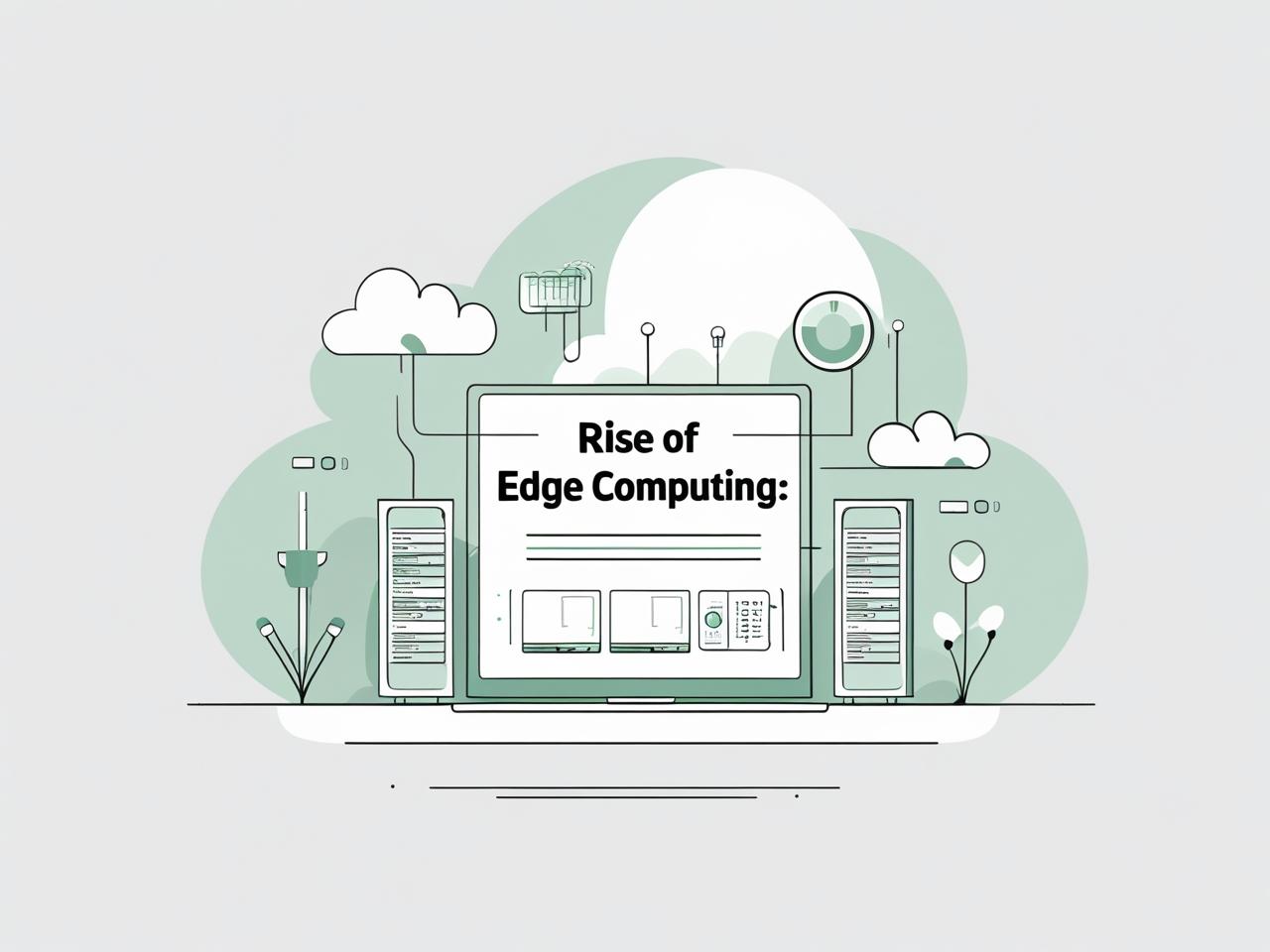
The Rise of Edge Computing
Edge computing is transforming how organizations process, analyze, and act upon data. By moving computational capabilities closer to data sources, edge computing reduces latency, improves performance, and enables new applications that were previously impossible with traditional centralized computing models.
Understanding Edge Computing
Edge computing represents a distributed computing paradigm that brings computation and data storage closer to the location where it's needed. Rather than sending all data to centralized cloud data centers for processing, edge computing performs processing at or near the data source—whether that's an IoT sensor, mobile device, or local edge server.
The approach addresses fundamental limitations of cloud-centric architecture, particularly around latency, bandwidth, and connectivity. For applications requiring real-time responses or dealing with large volumes of data, edge computing provides significant advantages over traditional cloud processing.
Edge computing exists on a spectrum of device-level processing (like smartphones and IoT devices) to edge data centers located in metropolitan areas. This flexibility allows organizations to optimize processing location based on specific application requirements and constraints.
Driving Forces Behind Edge Adoption
Latency requirements for modern applications have become increasingly demanding. Autonomous vehicles, augmented reality, industrial automation, and real-time gaming require response times measured in milliseconds—impossible to achieve with roundtrips to distant cloud data centers.
Bandwidth costs and limitations make it impractical to send all data to centralized locations for processing. Edge computing reduces bandwidth requirements by processing data locally and sending only relevant insights or summaries to central systems.
Data sovereignty and privacy regulations in many jurisdictions require data to remain within specific geographic boundaries. Edge computing enables compliance with these requirements while still providing advanced processing capabilities.
Key Use Cases and Applications
Industrial IoT and Manufacturing represent significant edge computing opportunities. Smart factories use edge computing to monitor equipment performance, predict maintenance needs, and optimize production processes in real-time. This local processing enables immediate responses to changing conditions without dependence on cloud connectivity.
Autonomous Vehicles and Transportation systems require split-second decision making based on sensor data. Edge computing enables vehicles to process camera feeds, lidar data, and other sensor inputs locally, ensuring safety-critical decisions aren't delayed by network latency.
Smart Cities and Infrastructure applications use edge computing to manage traffic flow, monitor environmental conditions, and optimize resource usage. Street-level edge devices can process traffic camera feeds, adjust signal timing, and respond to emergency situations without waiting for central coordination.
Technical Architecture and Implementation
Edge infrastructure typically includes edge servers, networking equipment, and storage systems deployed at distributed locations. These systems must be designed for reliability and remote management, as they often operate in challenging environments with limited physical access.
Container technologies and microservices architectures are particularly well-suited for edge deployments. These approaches enable efficient resource utilization, simplified deployment, and consistent operation across diverse edge environments.
Orchestration and management platforms provide centralized control over distributed edge infrastructure. These systems handle application deployment, configuration management, monitoring, and updates across potentially thousands of edge locations.
Data Processing and Analytics
Real-time stream processing at the edge enables immediate insights and actions based on incoming data. This includes filtering, aggregation, and analysis of sensor data, video feeds, and other high-volume data sources.
Machine learning at the edge allows organizations to deploy AI models for local inference without sending raw data to central systems. This approach improves response times, reduces bandwidth usage, and addresses privacy concerns.
Data synchronization and hybrid processing strategies determine which data remains at the edge, what gets sent to central systems, and how to maintain consistency across distributed environments.
Security and Management Challenges
Distributed security presents unique challenges for edge computing deployments. Organizations must secure potentially thousands of edge devices and locations, often with limited physical security and IT support.
Device management and lifecycle maintenance become complex when dealing with distributed edge infrastructure. Organizations need robust remote management capabilities, automated update processes, and reliable monitoring systems.
Connectivity and resilience planning must account for varying network conditions and potential disconnections. Edge systems must continue operating effectively even when connections to central systems are interrupted.
Integration with Cloud and Hybrid Strategies
Edge-to-cloud integration enables organizations to combine the benefits of local processing with centralized capabilities for storage, analytics, and management. This hybrid approach optimizes processing location based on specific requirements.
Data tiering strategies determine what data remains at the edge, what gets transmitted to central systems, and how long data is retained at each location. These decisions impact storage costs, performance, and compliance requirements.
Workload orchestration across edge and cloud environments requires sophisticated management platforms that can automatically deploy and manage applications based on requirements, resource availability, and cost considerations.
Future Trends and Opportunities
5G networks will significantly enhance edge computing capabilities by providing higher bandwidth, lower latency, and improved reliability for edge-to-cloud communication. This will enable new applications and use cases that weren't previously feasible.
AI and machine learning will become increasingly integrated with edge computing, enabling more sophisticated local processing and decision-making capabilities. This includes both inference at the edge and federated learning approaches.
The convergence of edge computing with other emerging technologies—including IoT, augmented reality, and blockchain—will create new opportunities for innovation and digital transformation across industries.
Organizations that successfully implement edge computing strategies will gain competitive advantages through improved performance, reduced costs, and the ability to deliver new services and experiences that weren't previously possible.